

UFSC Develops Satellites for Brazil’s First Commercial Space Launch


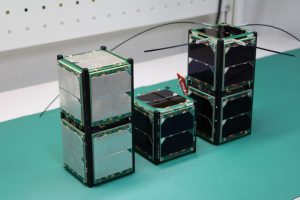
Equipment undergoes a wide range of tests (Photo: SpaceLab/UFSC)
SpaceLab, the Space Technology Research Laboratory at the Universidade Federal de Santa Catarina (UFSC), is preparing to place two new satellites into orbit, with launch scheduled by 28 November from the Alcântara Space Center (CEA) in Maranhão. The launch of FloripaSat-2A and FloripaSat-2B is part of the Spaceward 2025 mission, whose exact date will depend on weather conditions and operational checks. This will be the first time a complete platform fully designed by SpaceLab/UFSC will be tested in orbit.
For SpaceLab, the mission’s main goal is the in-orbit validation (IOV) of technologies developed entirely within the laboratory, consolidating the FloripaSat-2 platform as a foundation for future scientific and academic missions. “These satellites represent the maturation of a research line that has been developed over the years, bringing together science, technology, and human development,” says Professor Eduardo Bezerra, SpaceLab coordinator. “Beyond technical advancement, this is the realization of a project that prepares Brazilian engineers and scientists to work in every stage of a space mission.”
Unlike previous projects, the new satellites are entirely Brazilian-made, including the antenna, which was designed and tested at SpaceLab. The equipment underwent an extensive campaign of dynamic, thermal, and environmental tests, and will now be validated in orbit, contributing to Brazilian technological autonomy and the consolidation of an open-source platform for future low-cost missions.
This will also mark the first in-orbit test of this technology in Brazil, advancing communication systems intended for future satellite constellations. The planned mission duration is about five weeks, at an average orbital altitude of 300 km. Strategic in scope, the mission will validate Brazilian-developed onboard systems and reinforce the national nanosatellite ecosystem, bringing together universities, companies, and space agencies.
Training and scientific impact
All systems were designed and integrated by undergraduate and graduate students and researchers from SpaceLab, with support from the Brazilian Space Agency (AEB) and the National Council for Scientific and Technological Development (CNPq). “More than just putting a satellite into orbit, our focus is on training people who can conceive, design, and carry out complete space missions. That’s the true driving force of academic research,” emphasizes Professor Bezerra.
Operation Spaceward 2025 is the first commercial mission carried out by the Brazilian Air Force (FAB) in partnership with Innospace. It was authorized by the Korea Aerospace Administration (KASA) after meeting all safety, environmental, and performance standards. The SpaceLab team is now heading to Maranhão to accompany the final integration and launch phases.
The team describes this as “a moment of great scientific, institutional, and symbolic importance, reaffirming the leadership of Brazilian public universities in space engineering and technological innovation.” As Professor Bezerra concludes, “seeing our students take part in this directly is the greatest achievement of all.”
Translated by SINTER/UFSC.
Read the original article here.


