

Coronavirus: UFSC Central Administration suspends all in-person activities until 30 April
Due to the COVID-19 pandemic, the Central Administration of the Universidade Federal de Santa Catarina (UFSC) has extended the suspension of all academic and administrative in-person activities at the university until 30 April, according to the Normative Ordinance no. 357, published this Tuesday, 7 April. This measure unifies the suspension period, once classes in the State of Santa Catarina were suspended until 19 April and the UFSC administrative activities were being suspended for 1-week periods.
“The decision is supported by all indicators developed by specialists, which show that the contagion ‘peak’ in the outbreak curve shall occur around 20 April”, explains the Rector, Ubaldo Cesar Balthazar. Since UFSC suspended the classes initially from 16 March and later, after the State Decree, extended the suspension until 19 April, there was a significant movement of students going back to their hometowns. More than 30% of UFSC students have their families living outside the city where they study.
With this suspension, the technical and administrative activities can continue to be performed remotely – wherever possible – thus preserving social distance, which has been confirmed by health authorities as an essential strategy for preventing the mass spread of the virus. “We insist that what is most fundamental at this moment and in the following days and weeks is taking care of our health and the health of our friends and family. We should stay at home”, stressed the Rector.
Ever since the activities were first suspended, UFSC has been taking firm actions against the pandemic. Numerous research projects and investigations are presenting solutions and actions aimed at safety, testing, prevention measures, and solidarity. Moreover, since the University Restaurants are closed, the Prorectorate for Student Affairs (PRAE) has set up an emergency program to provide grants to the university’s most vulnerable students, based on their socioeconomic registration.
“We have been attentive to the students who depend on the restaurant’s meals and who, in this moment, are in need of further support”, explained the Pro-Rector for Student Affairs, Pedro Manique Barreto. In addition to the grants, which will be provided again in April, basic food baskets were offered to students in the Student Residence Hall and in the indigenous housing unit, and a ton of food has been sent to each of the four UFSC campuses outside of Florianópolis. This week, with the support of the Students’ Union (DCE), PRAE is also engaged in another action, which will distribute six more tons of food.
“As I said two weeks ago, the University hasn’t stopped. We are working, and we are working a lot, to maintain our institution focused on preserving lives, which is our most important and essential asset”, said the Rector.
To read the Normative Ordinance no. 357/2020/GR, click here.
By AGECOM/UFSC | Translated by SINTER
Read the original article here.
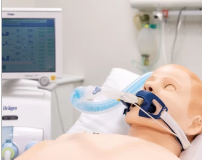 The first prototype is almost finished due to the efforts of students, faculty, technical administrative staff, physicians and many other professionals. “This project integrates the expertise of many researchers, applying Engineering knowledge with efficiency and simplicity to meet an urgent need for complex equipment”, explains Professor Henrique Simas, a faculty member of the Department of Mechanical Engineering (


